
Accademia Gallery vs Uffizi Gallery: Which Should You Visit?
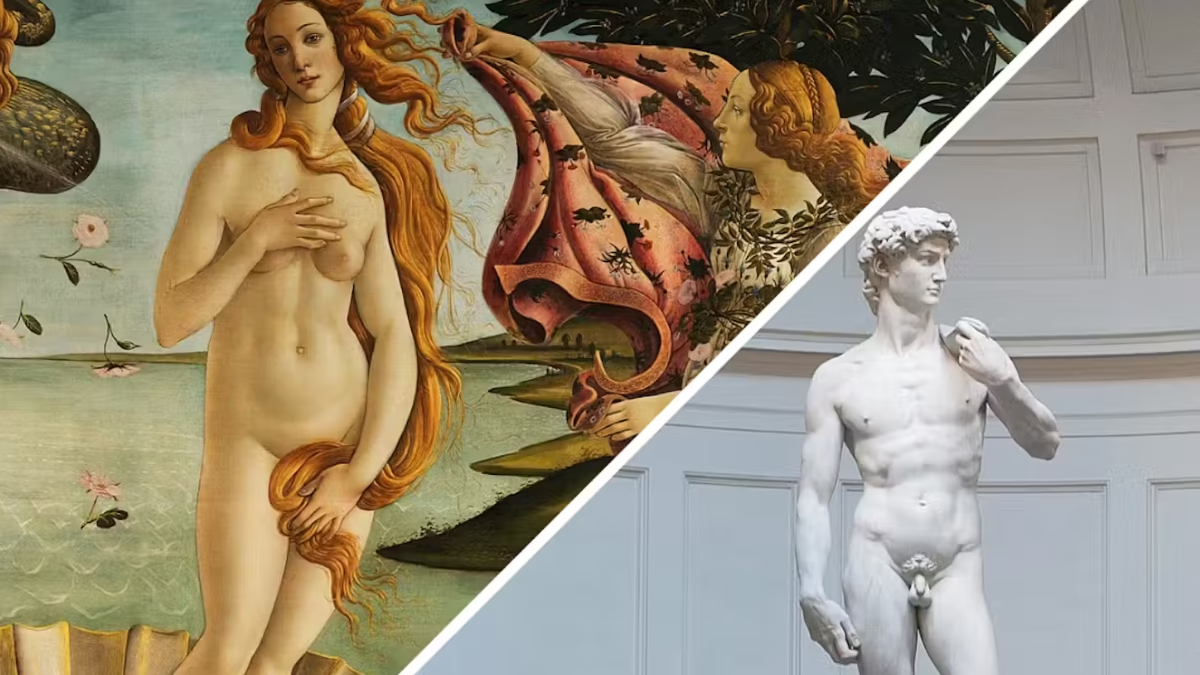
Visit both if you can — they do genuinely different things. The Accademia is focused, fast, and built around one extraordinary object (David) plus a remarkable supporting collection. The Uffizi is encyclopaedic, vast, and covers three centuries of Italian painting in 45 rooms. If forced to choose one: first-time visitors with a strong interest in sculpture should start with the Accademia; visitors primarily interested in painting should prioritise the Uffizi. Most visitors do both in a single Florence day.
Every first-time visitor to Florence faces this question. The Accademia Gallery and the Uffizi Gallery are the two most visited museums in the city, both require advance booking in peak season, both charge similar admission prices, and both contain works on most visitors’ bucket lists. For those with only a day or two in Florence, the choice feels high-stakes.
This article compares the two honestly — not to promote one over the other, but to help you decide which fits your visit, and to explain why most visitors find that doing both in a single day is more achievable than it sounds.
The Basic Comparison
| Factor | Accademia Gallery | Uffizi Gallery |
|---|---|---|
| Primary collection | Michelangelo sculpture | Italian Renaissance painting |
| Size | Compact — 6–7 rooms plus upper floor | Large — 45 rooms across 3 corridors |
| Time needed | 60–90 minutes | 2–4 hours |
| Admission (adult, online) | €20 | €29–€33 |
| Advance booking required? | Yes in peak season | Yes in peak season |
| Walk-up queue without booking | 60–120 min | 60–120 min |
| Distance from each other | 15-minute walk through historic centre | — |
| Crowd density | High at Tribune; calmer elsewhere | High in Botticelli rooms; calmer elsewhere |
| Best for | Sculpture, focused visits, families | Painting, comprehensive coverage, art enthusiasts |
| The one work most visitors come for | Michelangelo's David | Botticelli's Birth of Venus and Primavera |
What Each Museum Offers
The Accademia Gallery
The Accademia is a museum built around a small number of extraordinary objects rather than comprehensive breadth. Its Michelangelo collection — David, the four Prisoners, St. Matthew — is the greatest single-institution concentration of his sculpture in the world. The supporting collection adds the musical instruments (including the best-preserved Stradivari in existence), the Byzantine and Gothic paintings (the largest gold-ground collection in Italy), and the Renaissance paintings of the Hall of the Colossus.
What the Accademia gives you is an experience of concentrated excellence. You are not confronted with 45 rooms of material requiring sustained attention and selection. You walk in, you encounter the Prisoners, you reach David, and you can calibrate how much more you want to see. A focused visitor can see everything essential in 60 minutes; a thorough visitor can complete the collection in two hours.
The defining experience of the Accademia is not intellectual but physical: standing in front of something 5.17 metres tall that was carved by a single person from a single piece of marble. That experience is not replicable anywhere else.
The Uffizi Gallery
The Uffizi is one of the great encyclopaedic art collections in the world — a survey of Italian painting from the late medieval period through the Baroque, covering 45 rooms, with a concentration of masterworks that no other museum outside Italy can match. The sequence runs from Cimabue and Duccio in Room 2 through Giotto’s Maesta, Botticelli’s Birth of Venus and Primavera (Room 10–14), Leonardo’s Annunciation, Michelangelo’s Tondo Doni (the only completed Michelangelo panel painting, directly visible from the David corridor’s historical context), Raphael’s portraits, Titian’s Venus of Urbino, and Caravaggio’s dramatic late works.
The Uffizi is not a museum you can do quickly and feel satisfied. A focused two-hour visit covers the highlights; a comprehensive visit takes half a day. The challenge is managing the transition between rooms — the wealth of material makes selective attention necessary, and visitors who try to see everything often end up seeing nothing with sustained care.
The defining experience of the Uffizi is being in the presence of the most concentrated gathering of Renaissance masterworks in existence. It is intellectual as much as sensory — you know these works before you arrive, and the museum experience is a negotiation between the image you carry in memory and the physical object in front of you.
The Art Historical Relationship
The Accademia and the Uffizi are not competitors in the same category — they cover genuinely different artistic territory that complements rather than duplicates each other.
The Accademia’s strength is Florentine sculpture, and its painting collection is largely pre-Renaissance — the gold-ground Byzantine and Gothic panels that preceded the revolution the Uffizi documents. The Uffizi’s strength is painting, and it covers the full arc of Italian Renaissance and Baroque painting that the Accademia does not address.
Visiting them in sequence in a single day produces something that neither achieves alone: a coherent picture of Florentine Renaissance culture across its two most ambitious artistic forms. Michelangelo’s David at the Accademia and Michelangelo’s Tondo Doni at the Uffizi are the same artist working in different media — seeing both in one day is an art historical argument made visible.
The Accademia’s Byzantine painting rooms (gold-ground altarpieces, 13th–14th centuries) and the Uffizi’s early rooms (Cimabue, Duccio, Giotto) cover overlapping chronological ground from different perspectives — the Accademia focuses on Florentine Gothic specifically, the Uffizi on the broader Tuscan tradition. Visiting both deepens both.
Practical Comparison: Doing Both in One Day
The 15-minute walk between the Accademia (Via Ricasoli) and the Uffizi (Piazzale degli Uffizi, near Piazza della Signoria) passes through Piazza del Duomo and Piazza della Signoria — effectively a short walking tour of Florence’s civic core. Many visitors combine the two museums with the Duomo walk between them.
Recommended same-day sequence:
- 8:15 am: Accademia Gallery opens. Book the first slot. The Tribune is at its calmest in the first 30–45 minutes after opening.
- 9:45–10:00 am: Exit the Accademia. Optional: coffee near Piazza San Marco (5 minutes).
- 10:15–10:30 am: Walk through Piazza del Duomo toward Piazza della Signoria (10–15 minutes). Brief stop at the copy of David in the piazza — the comparison with the original you have just seen is interesting.
- 11:00–11:30 am: Uffizi entry (book this slot in advance). Allow 2–3 hours for a good visit through the highlights.
- 1:30–2:00 pm: Exit Uffizi. Lunch in the area.
This schedule is comfortable for most visitors. The Accademia takes 60–90 minutes; the Uffizi takes 2–3 hours; the walk between them is pleasant. Total time: 4–5 hours plus lunch.
See our Accademia + Uffizi combo ticket guide for the combined booking option.
Who Should Choose the Accademia Over the Uffizi
If you can only do one and primarily want: – Sculpture over painting → Accademia – The single most famous artwork in Florence → Accademia (David) – A focused, manageable visit → Accademia – A visit with children → Accademia (David’s scale works for any age) – A visit of 60–90 minutes rather than 3 hours → Accademia
Who Should Choose the Uffizi Over the Accademia
If you can only do one and primarily want: – Painting over sculpture → Uffizi – Botticelli’s Birth of Venus and Primavera → Uffizi – Comprehensive coverage of Italian Renaissance art → Uffizi – Leonardo, Raphael, Titian, Caravaggio → Uffizi – A repeat visit to Florence (having already seen David) → Uffizi
The Honest Verdict
The question “which is better?” is the wrong question. The Accademia and the Uffizi do not compete; they complement. The right question is “which fits my visit?” — and the answer depends on your time, your interests, and whether this is a first visit or a return.
For a first visit to Florence with one day: visit both. The combined time commitment (90 minutes at the Accademia, 2–3 hours at the Uffizi) is achievable in a morning. The walk between them is one of the most rewarding 15 minutes in any Italian city. Booking both in advance eliminates queue time at either.
For a visit of half a day: David and the Accademia in the morning, Uffizi on your next visit, or vice versa.
For a visit with children: the Accademia first. David is the more immediately compelling experience for younger visitors. The Uffizi can follow for older children and teenagers.
For a repeat visitor who has seen David: the Uffizi rewards return visits far more than the Accademia does — its depth and breadth mean you find new things each time. The Accademia’s collection, while extraordinary, does not expand significantly between visits.
Frequently Asked Questions
Is the Accademia Gallery bigger or smaller than the Uffizi?
Much smaller. The Accademia has 6–7 main rooms plus the upper floor; the Uffizi has 45 rooms. A thorough Accademia visit takes 90 minutes; a thorough Uffizi visit takes 3–4 hours.
Is the Accademia Gallery cheaper than the Uffizi?
Yes, slightly. Standard online adult admission is €20 at the Accademia versus €29–€33 at the Uffizi.
Can I visit both museums on the same day?
Yes — this is one of the most popular Florence day itineraries. The walk between them is 15 minutes. Book the Accademia for 8:15 am and the Uffizi for 11:00 am.
Do both museums require advance booking?
Yes, during peak season (April–October). Walk-up tickets are technically available but queues are 60–120 minutes and slots sell out at both museums. See our Accademia tickets guide and book in advance.
Which museum has more Michelangelo works?
The Accademia has more Michelangelo sculpture — David, the four Prisoners, St. Matthew, and the Palestrina Pietà. The Uffizi has the Tondo Doni — Michelangelo’s only completed panel painting. For Michelangelo sculpture, the Accademia is unmatched worldwide.
Which is better for children?
The Accademia. David’s scale makes an impression on children of any age without requiring prior knowledge. The Uffizi is better for children who are older and have some background in Renaissance art, or who visit with a family tour guide. —
